Here Fishy Fishy

No, I have not taken up fishing. We did however go to the D.C. Booth Historic Fish Hatchery in Spearfish SD for the day. (We chose the best day to go more on that later.) This is a FREE attraction it is situated right next to the city park in Spearfish SD. It looks nondescript when you park in the lot and walk across the boardwalk. Once inside you see turn of last century buildings, water and fish the grounds are well kept.

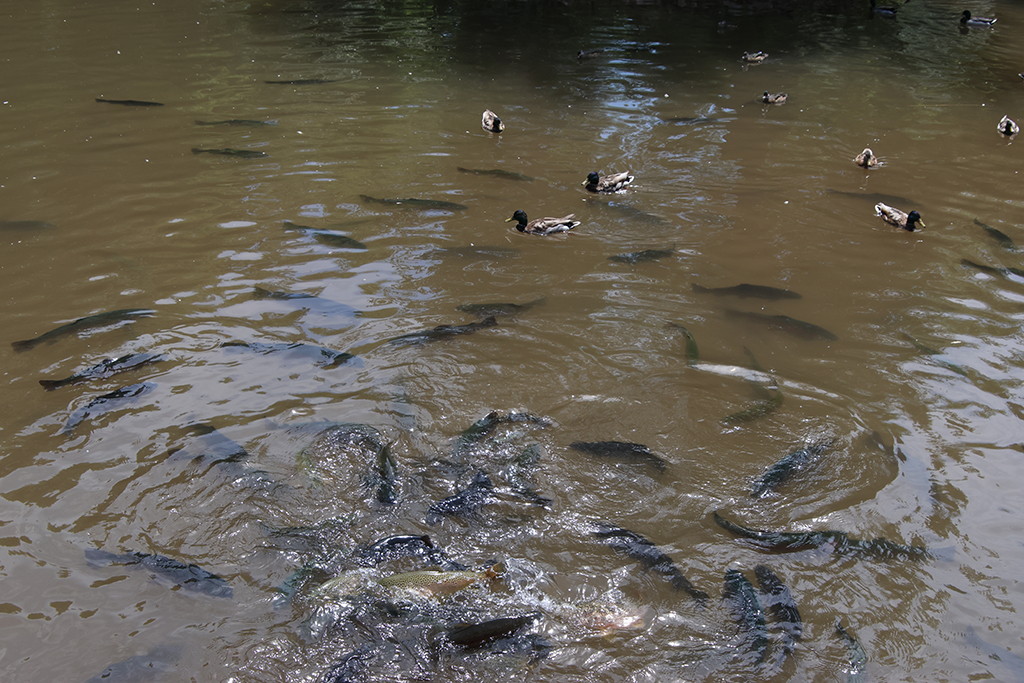
Our first stop was the pond gift shop to get the lay of the land and buy some fish food. Roy never misses an opportunity to feed the animals. I never miss the opportunity to photograph him feeding the animals. We headed down the elevator to see the underwater viewing windows. In the pond there is rainbow, brown, and cut throat trout. The fish in this pond are only for display they will not be released to the wild. Some of the fish are over 8 years old and about 14lbs. Big uns I tell you. The window was a tad muddy due to all the recent rains and the small flood the hatchery experienced earlier in the month. I couldn’t figure out why all the fish were moving back and forth and jumping out of the water, it looked strange. I was seeing the underneath action from the fish being fed.

We headed back up and decided it was time to feed the fish. The amazing thing is watching from above was not as cool as watching from below. Although I did get to see a few fish breech the surface. You could also see that the ducks knew where free food was.

We tried to figure out where to the start the journey. The museum of course. This building was the original 1899 Spearfish Hatchery.

full scale fish car

Inside there was a model of a Fish Rail Car. The model was made for $400 and was displayed at the 1900 Paris Exposition. The car itself had crew quarters for the employees who had to ride along and make sure the fish arrived alive. The system for aerating the water was advanced for its time. This was only one mode of transportation to get fish from hatchery to stream. Here is a link to the fish car era.
spring stocking.

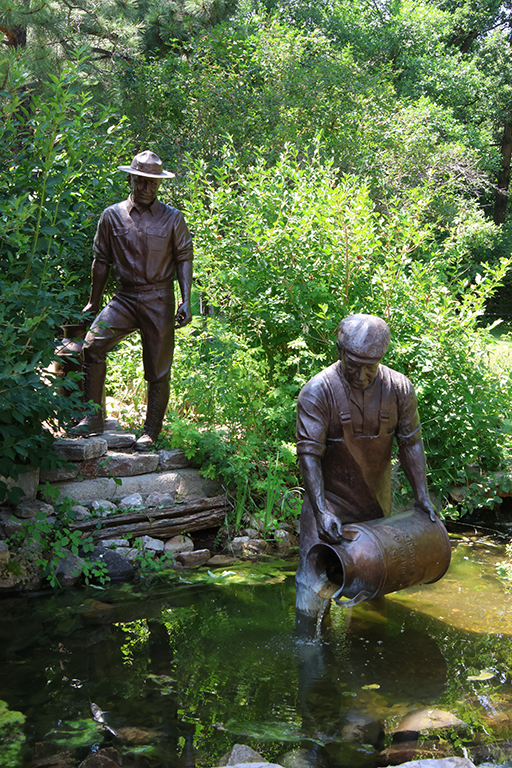
Some other methods of transportation include, backpacking, trucks, planes, and helicopters. The containers included backpacks tanks on trucks and even milk cans. The photo to the left captures stocking fish using a milk can. Whatever container the fish are in the water still had to be circulated, cooled, and oxygenated.

Also in the museum was the hatchery office. It included the original roll top desk, plus two pieces of equipment I even used when I was younger. Unfortunately, kids today have no experience with this type of equipment. (I felt a little old after seeing these.)

I learned that the fresh water from Spearfish Creek was brought into the hatchery via cedar water pipes. This occurred until the 1970s when most of the pipes were replaced. The hatchery made their own fish food by grinding up raw meat and mixing it with grains prior to the invention of fish pellets.

After the museum we headed up to the Booth House which is where the superintendents lived until 1983. The house was constructed in 1905 it was one of the first houses in Spearfish to have indoor plumbing and electricity.

Finishing up with the hatchery and enjoying the beautiful weather we stopped for ice cream then headed towards Deadwood and home. Where a surprise was waiting.

Something Fishy

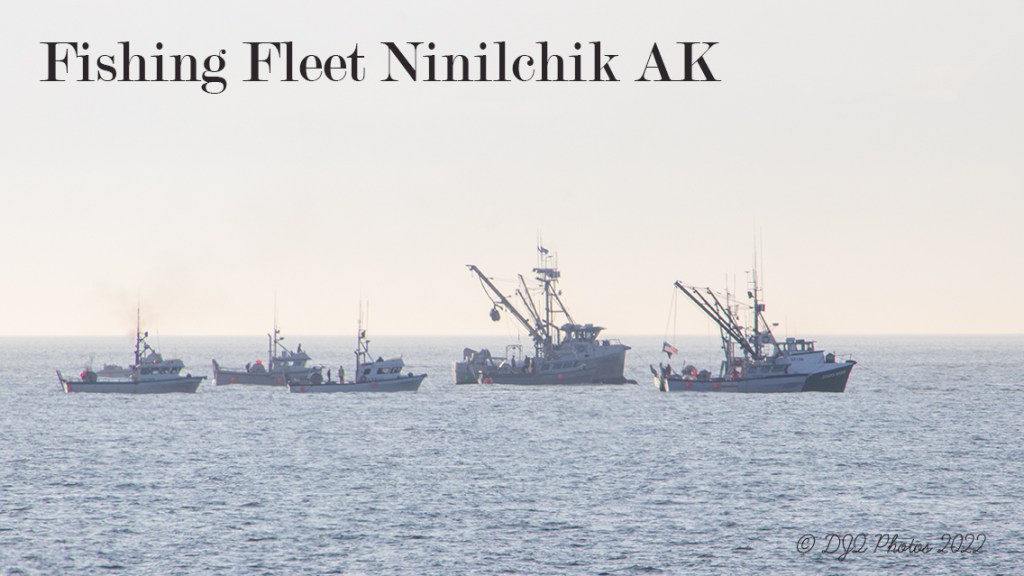
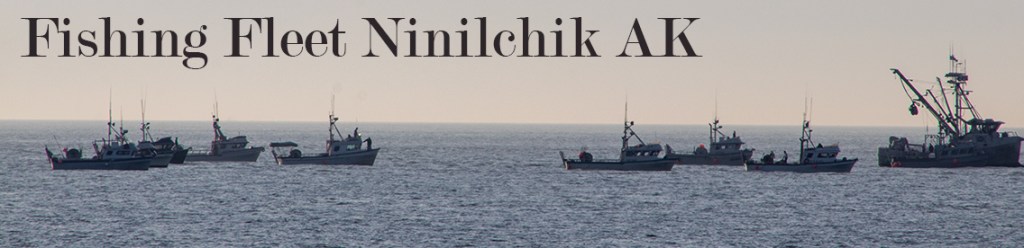
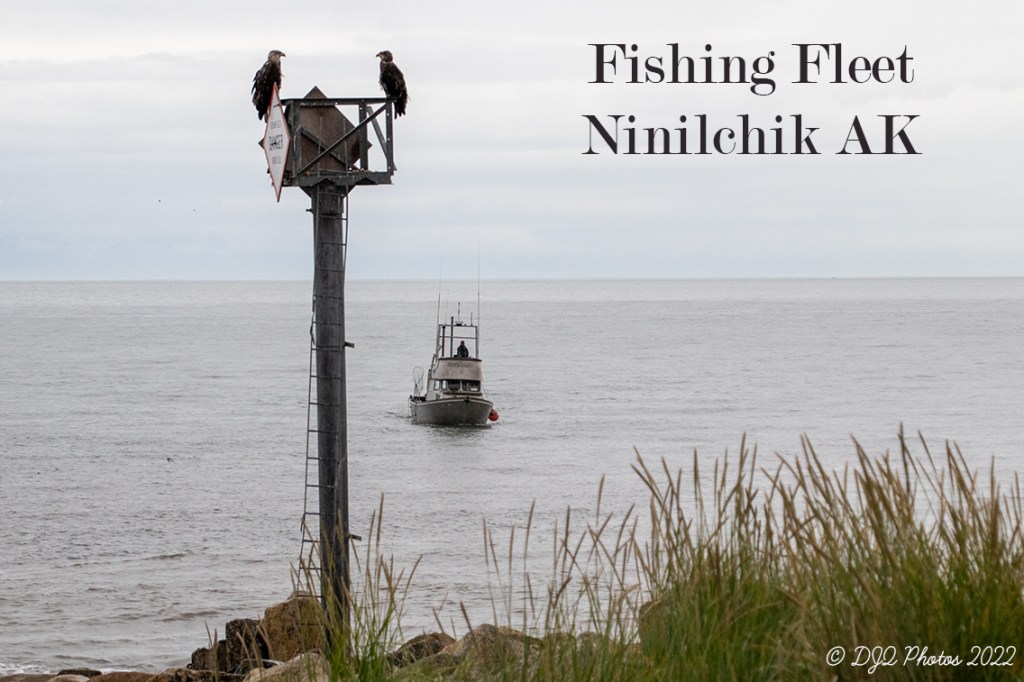
Salmon that is. We had an opportunity to watch the fleet of small boats go out and catch salmon then bring it back to the dock and dump the catch. This happened over many days while we were in Ninilchik. This is an advantage to staying in one place for an extended amount of time. When you find something interesting you can continue to return to the scene and watch it develop.

just a few

When we first came upon the harbor at Ninilchik there were just a few boats, so our thought was nice local harbor. When the fleet was all in the boats were lined up three or four deep on both sides of the dock.

the whole fleet

I would really hate to be the boat that was first in and set up against the dock. First in last out is the case here. Someone let us know that this was an actual working fishing harbor. So of course, we had to check back often to see if there was something going on.

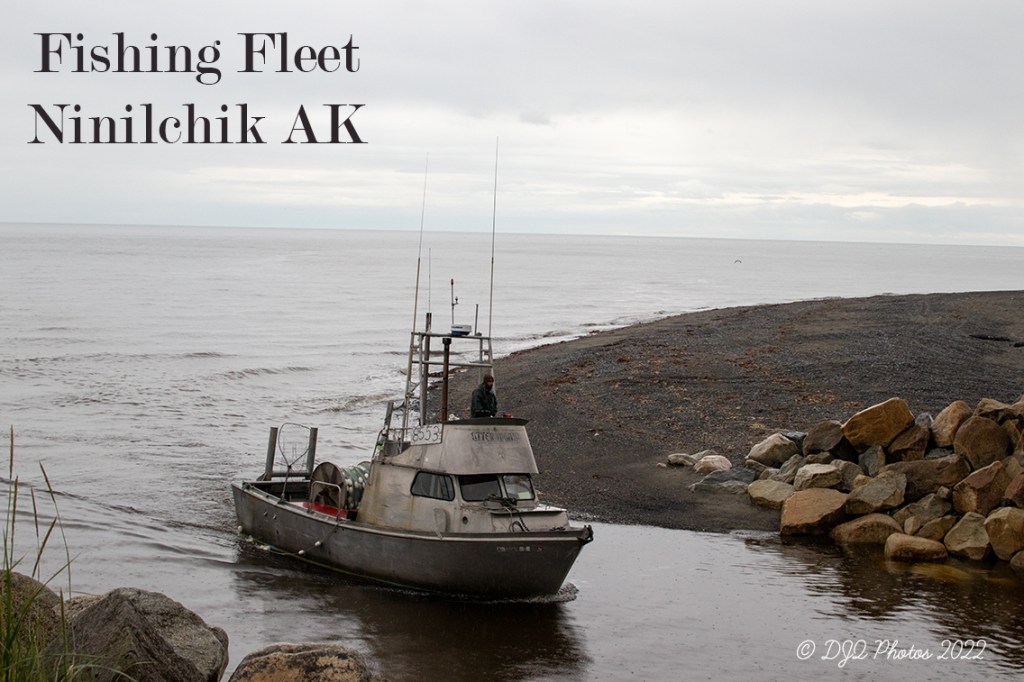
The type of fishing vessels are gillnetters, and the process of fishing is called gillnetting. We were also lucky to see one of the boats get ready to go out and fish. It seems that the salmon are kept on ice for the whole process from being caught to being delivered to the store. We watched one boat being loaded with ice and found out that all but one fish hold is filled with ice. The empty fish hold is where the first part of the catch goes, the deckhands then pull the ice from the other holds to cover the catch. The video below was taken right after they had spilled a whole tub of ice.
making it level

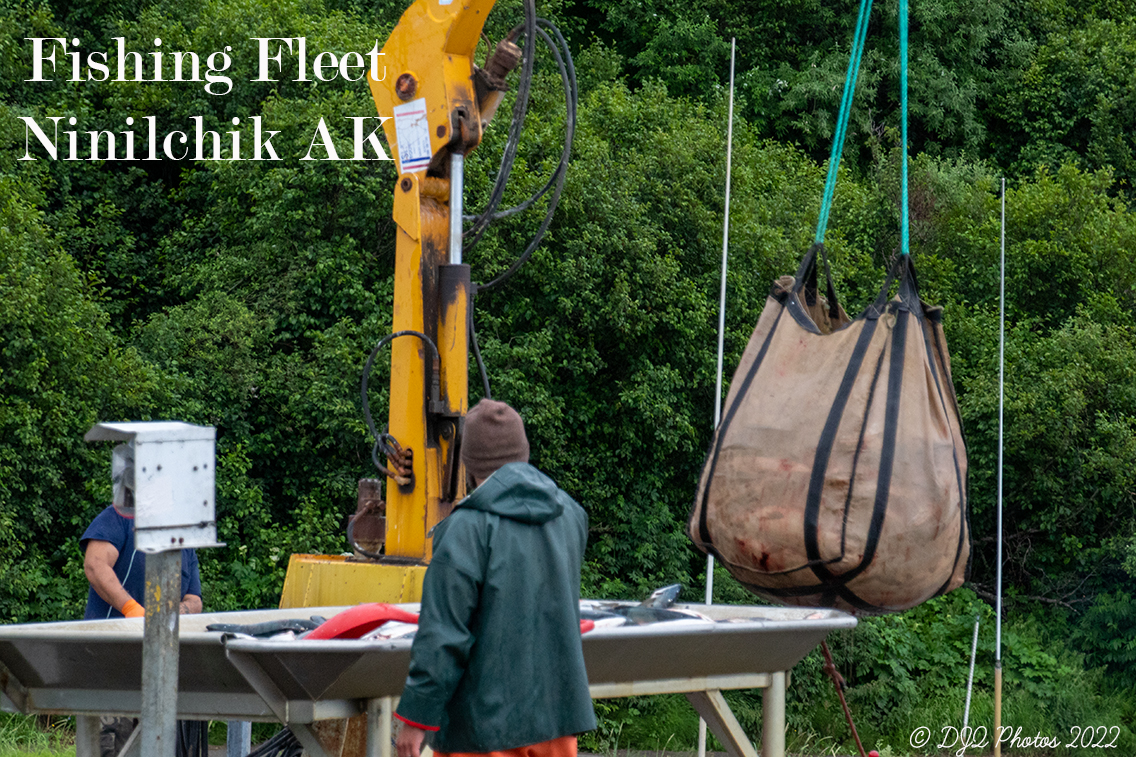
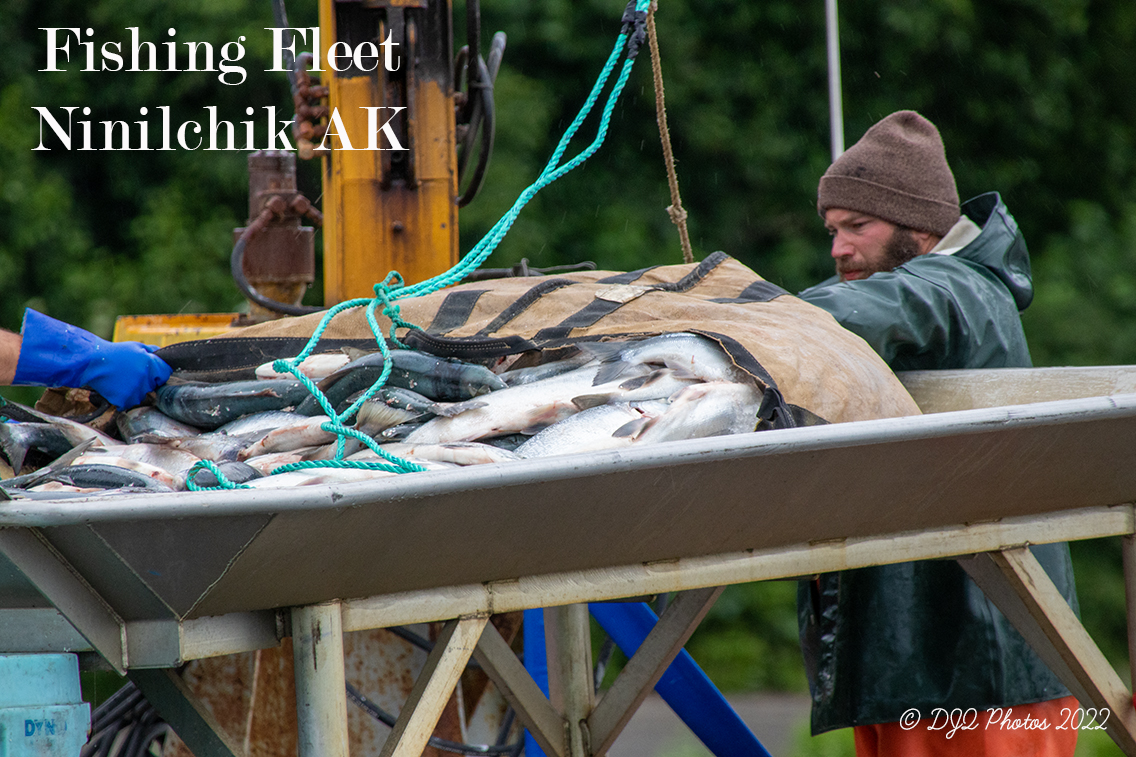
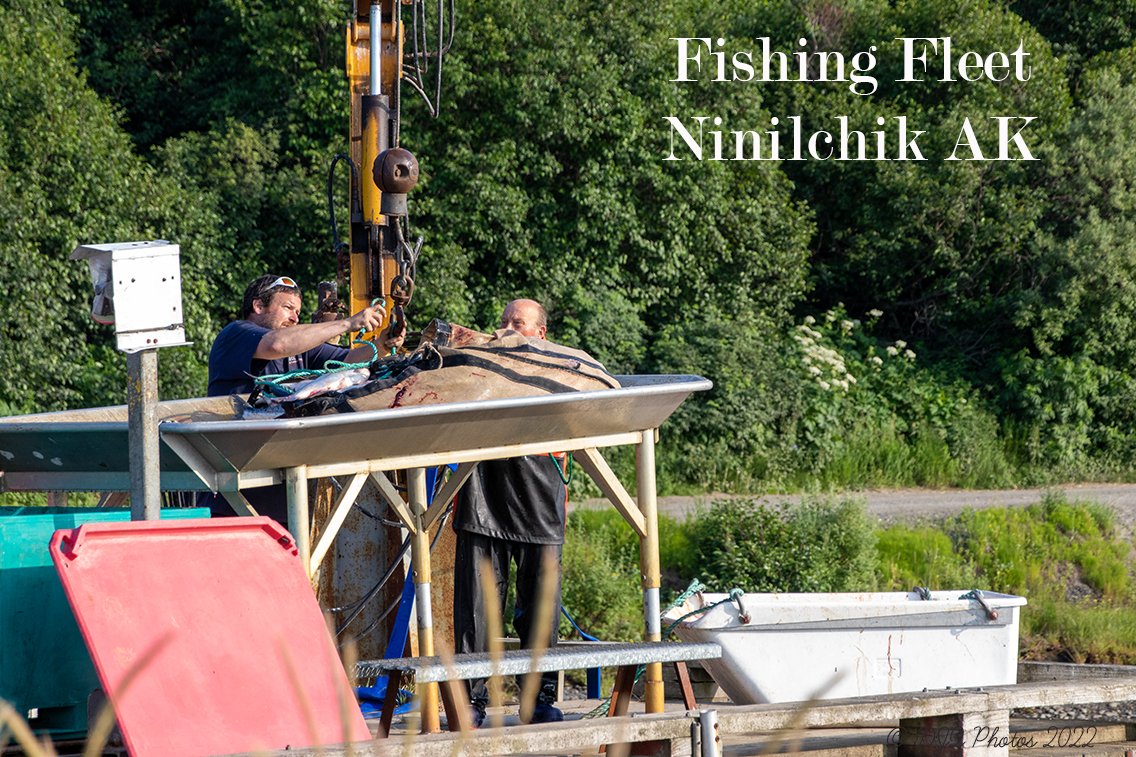
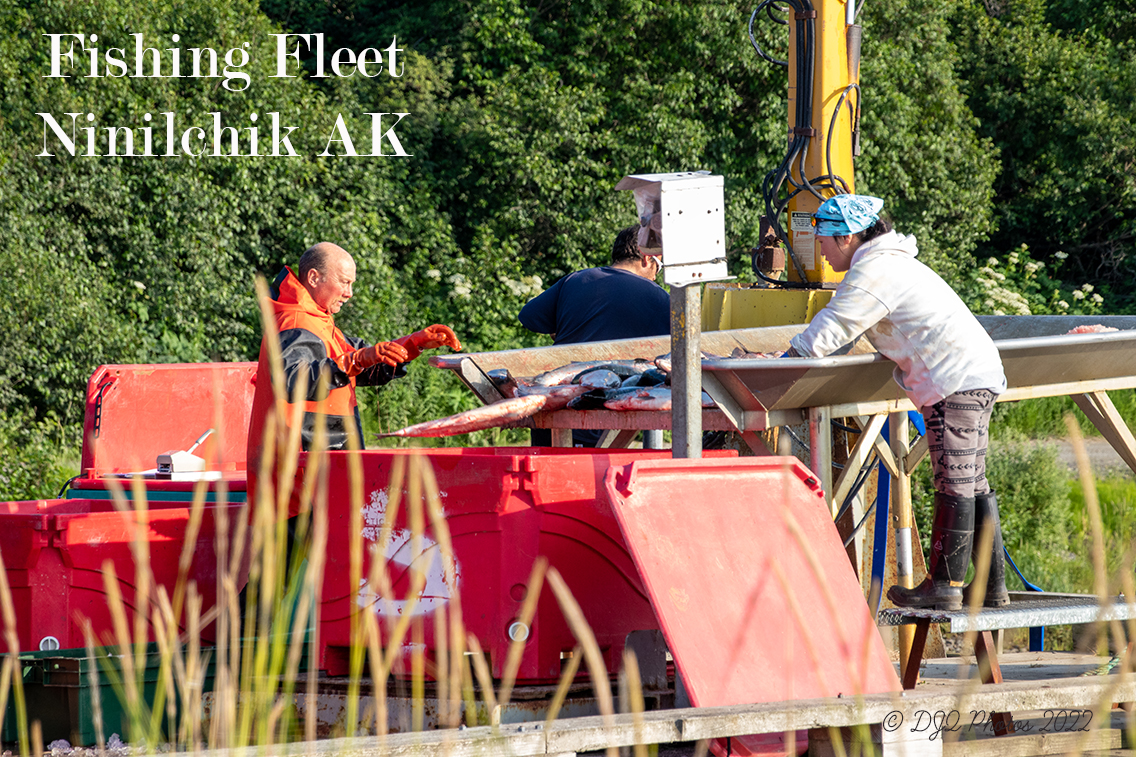
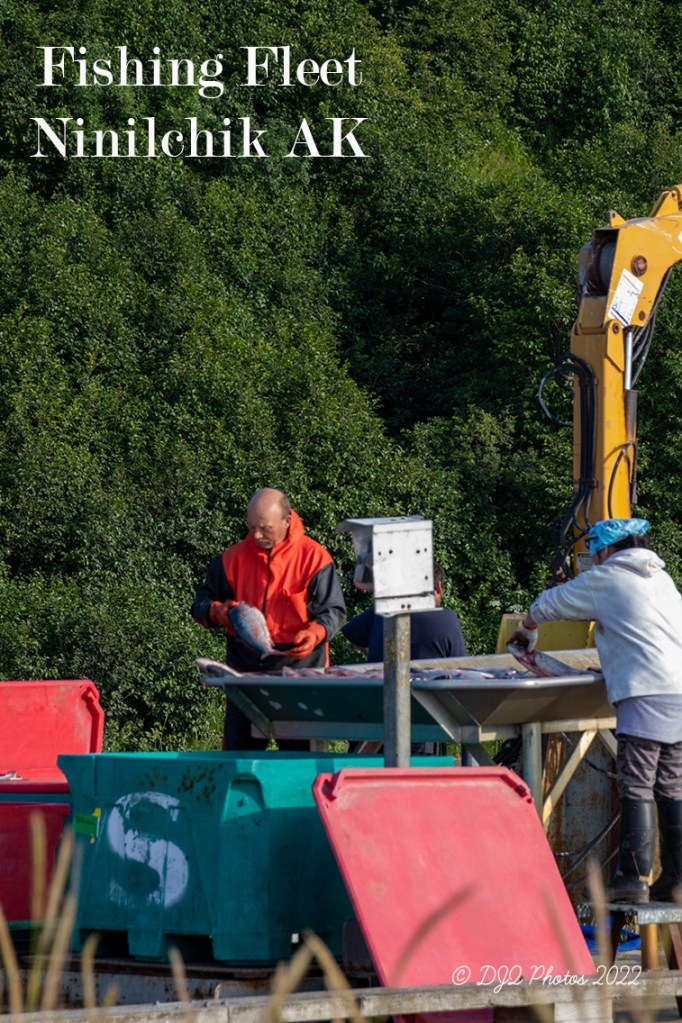
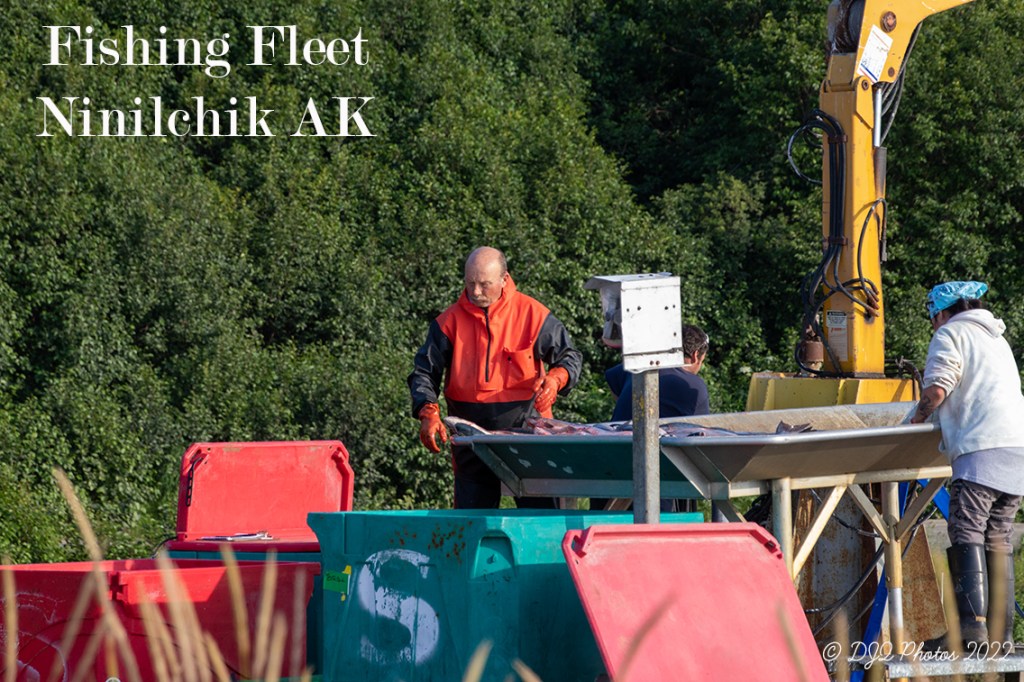
Once the fleet comes back in the fish are pulled up from the holds and poured out on a metal table. The first load of fish harvesting for lack of a better description the workers did very little sorting as compared to the second time we went out to watch them. The two crews accomplished the same tasks but approached them differently.

I do know one of the boats we watched had three full bags of fish. It was fascinating to watch the whole process from lifting the catch out of the hold to watching it go in the crates to head to market.

Crew number one all guys in my opinion they just wanted to get it done

The second crew was all business

I was also surprised how quickly the crews were able to clear the fish and go home. There have been about 161 million salmon taken by commercial fisheries this year so far. This fishery was just a small part of that catch.

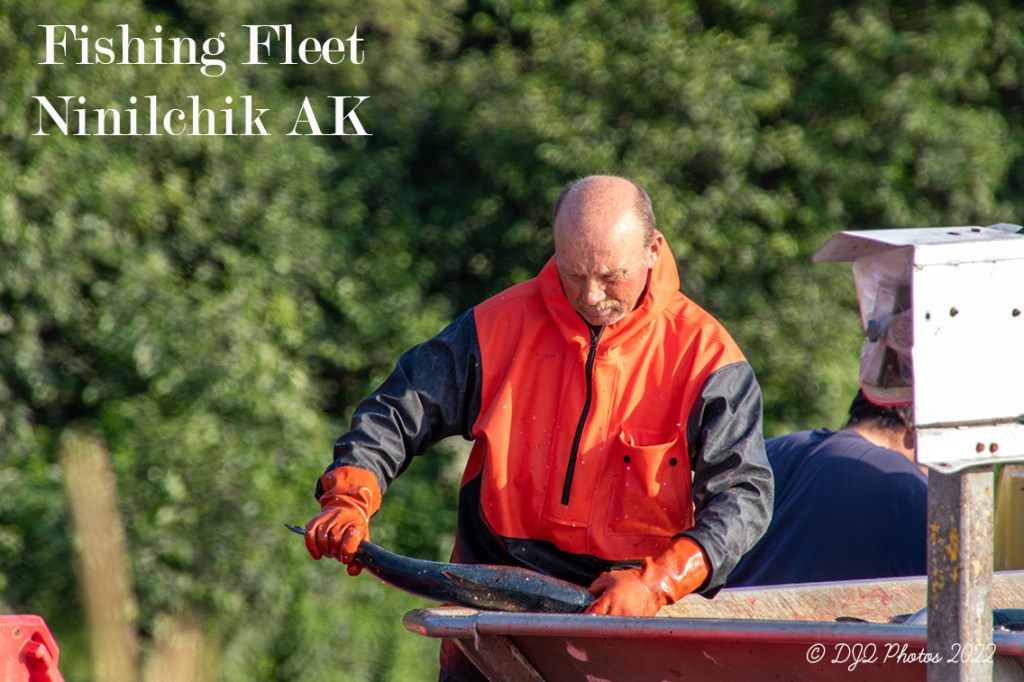
I put a page together with the videos I took of the fish sorting and some other things you might enjoy. Fishy Videos Also Enjoy the slide show I found the balding guy in the orange to be quite the fish tosser.

Way TOO Many People

Dip netting. (I borrowed this video from YouTube). I did not have a drone to capture the massive amount of people. They were close together and it made me wonder how the salmon chose which net to get caught in.

the beach
looking at all the tents

The fact that dip netting is only open to Alaskans is amazing and good. It is called Subsistence Fishing this allows for Alaskans to fill their freezers for the winter. Here is a link to the permits required. We went to the Kasilof River on July 9th to experience the sight of salmon getting entrapped in a net. It was so overcrowded they were even parking under signs that said no parking anytime.

NO Parking
No Parking

It is interesting to learn that a permit is required and that you have to clip off the end tips of the tail this is to distinguish the fish that were gotten during dip netting and the ones caught with rod n reel. (Which has been hard to do this week July 17th too much rain means swollen rivers). Speaking of rain this is why I am catching up on blogs and photos. We extended on the Kenai to maybe get a few more pictures. We’ve gotten rain and a few less pictures. I got sidetracked back to better weather and the drive up the Peninsula.

Is it safe now

We headed into Kenai so I could do some grocery shopping. Headed towards Kenai on the Sterling Highway was where I was treated to seeing two moose. Roy was able to enjoy also but they were on my side of the car. (So, I was closer.) The first one was just hanging around a dirt lane popping in and out of the tree line.

What are you looking at?

The second moose was just chewing and minding her own business along the side of the road. I took some pictures and we headed onward.

a large chariot
the terminal

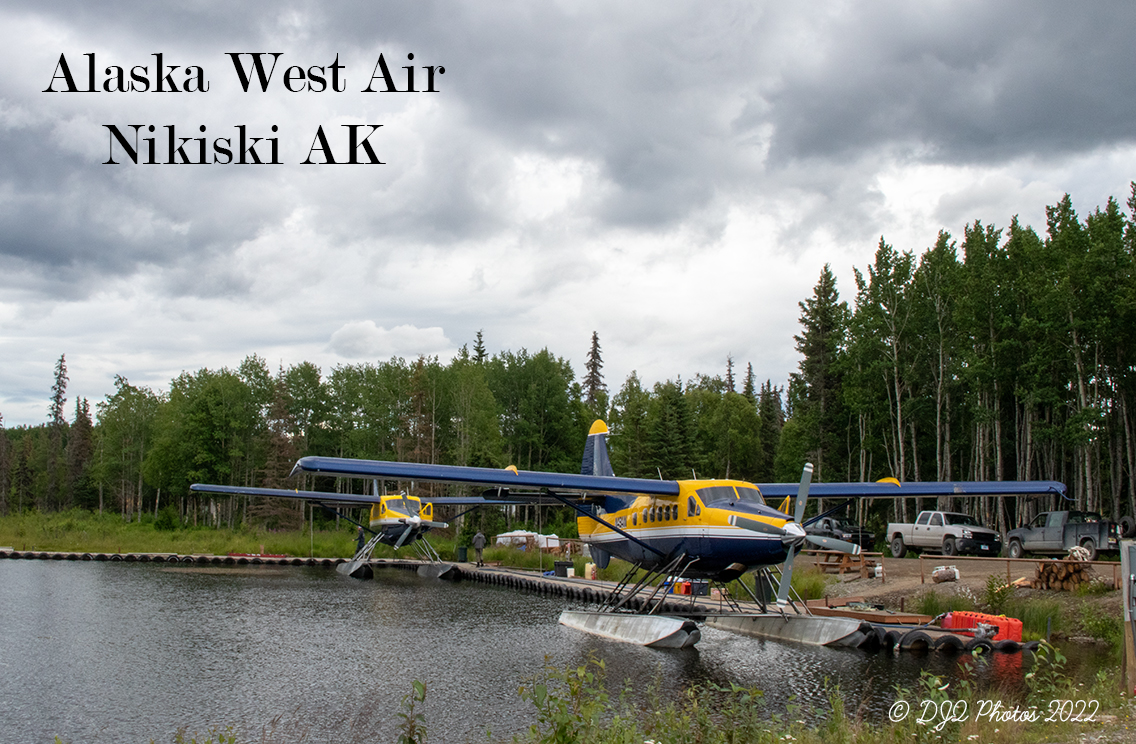
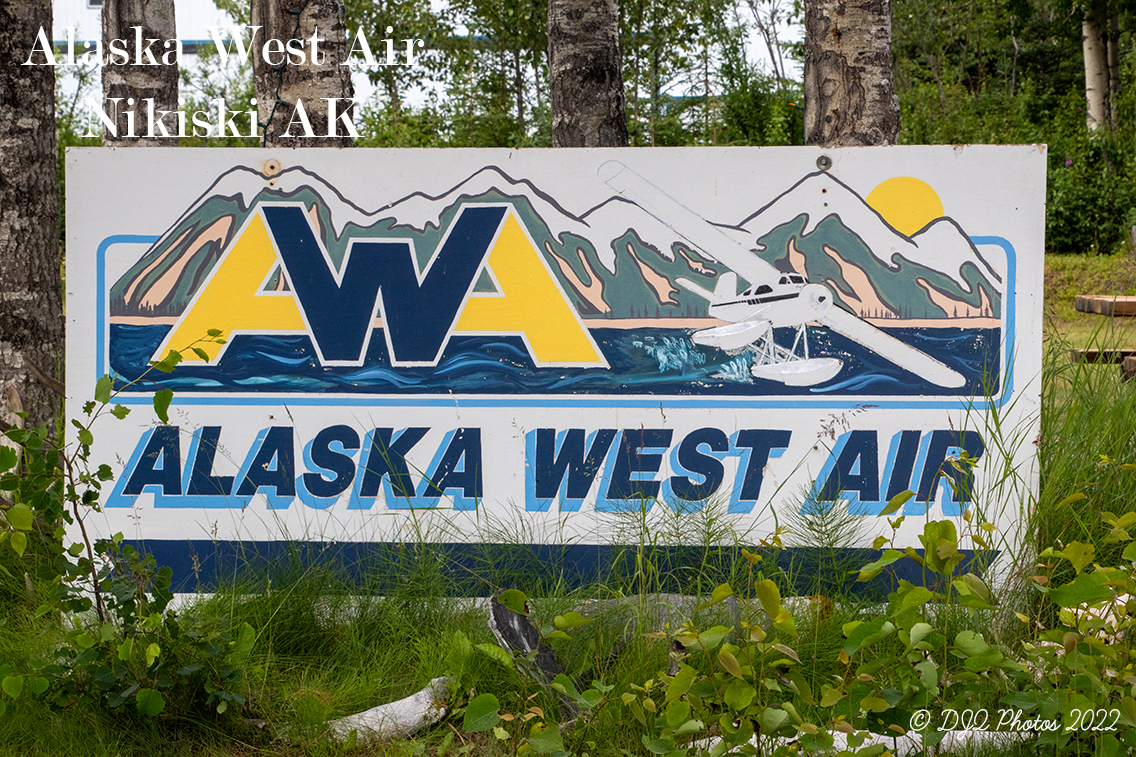
On we go to get me salad stuff which Roy struck out with Safeway. It was early yet so we decided to find out where the bear viewing boat trip left from so, we knew where we were going and how big the planes were. I was surprised at how rough the roads were getting out to the Alaska West Air, water terminal.

ready

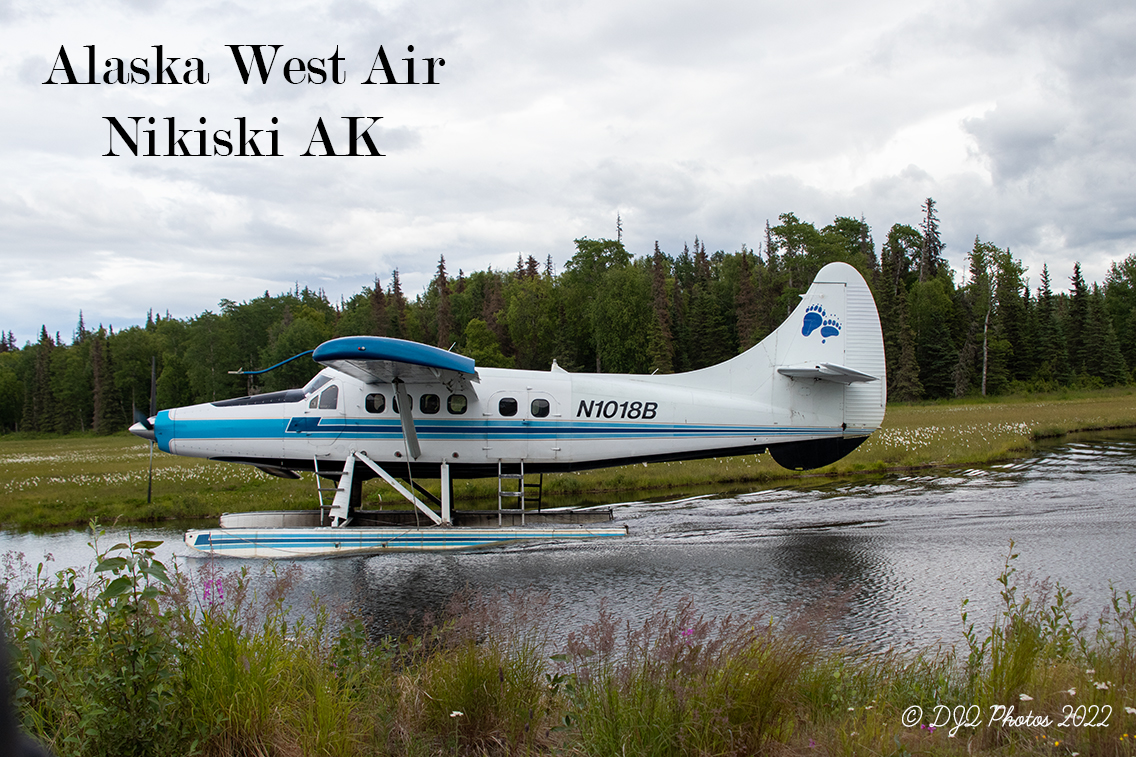
Sitting in the parking lot I got lucky and was able to catch a plane taking off. The taxi way is also the landing zone.

lift off

After a full day of travel, we almost found everything for my salads. Roy still had to pick up lettuce and some onions from Wal-Mart because Safeway didn’t have any. No onions but we were able to get fresh leaf lettuce and some farm fresh eggs. Roy pulled one of his favorite u-turns for a roadside stand that advertised fresh veggies.

The enjoyable thing about driving some of the backroads is you never know what good farm fresh things you’ll find.