No, I have not taken up fishing. We did however go to the D.C. Booth Historic Fish Hatchery in Spearfish SD for the day. (We chose the best day to go more on that later.) This is a FREE attraction it is situated right next to the city park in Spearfish SD. It looks nondescript when you park in the lot and walk across the boardwalk. Once inside you see turn of last century buildings, water and fish the grounds are well kept.

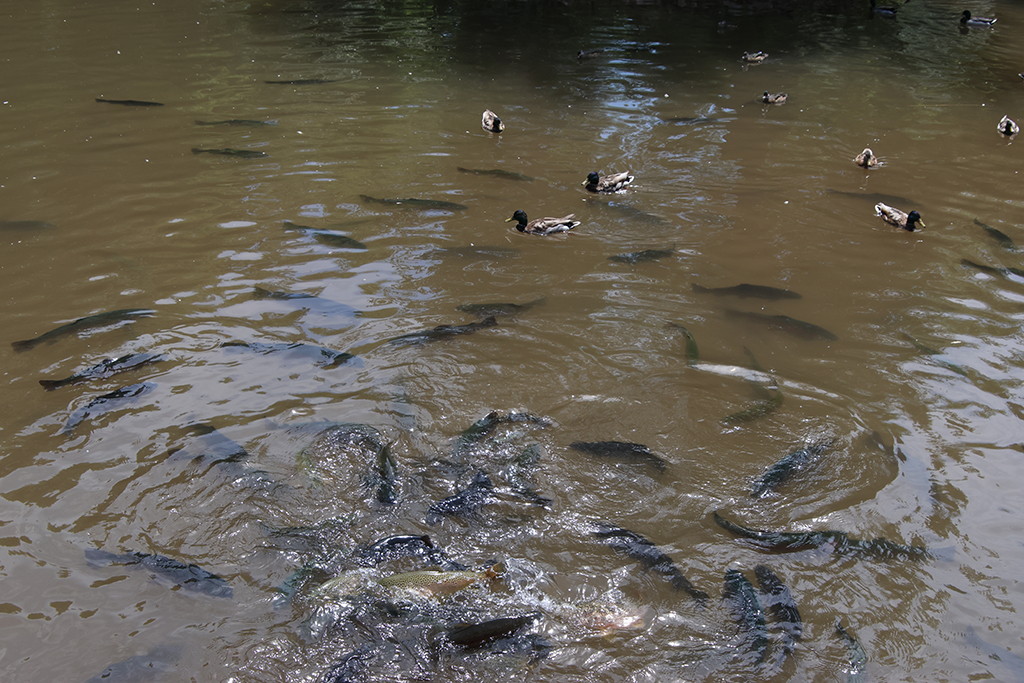
Our first stop was the pond gift shop to get the lay of the land and buy some fish food. Roy never misses an opportunity to feed the animals. I never miss the opportunity to photograph him feeding the animals. We headed down the elevator to see the underwater viewing windows. In the pond there is rainbow, brown, and cut throat trout. The fish in this pond are only for display they will not be released to the wild. Some of the fish are over 8 years old and about 14lbs. Big uns I tell you. The window was a tad muddy due to all the recent rains and the small flood the hatchery experienced earlier in the month. I couldn’t figure out why all the fish were moving back and forth and jumping out of the water, it looked strange. I was seeing the underneath action from the fish being fed.


We headed back up and decided it was time to feed the fish. The amazing thing is watching from above was not as cool as watching from below. Although I did get to see a few fish breech the surface. You could also see that the ducks knew where free food was.
We tried to figure out where to the start the journey. The museum of course. This building was the original 1899 Spearfish Hatchery.

Inside there was a model of a Fish Rail Car. The model was made for $400 and was displayed at the 1900 Paris Exposition. The car itself had crew quarters for the employees who had to ride along and make sure the fish arrived alive. The system for aerating the water was advanced for its time. This was only one mode of transportation to get fish from hatchery to stream. Here is a link to the fish car era.
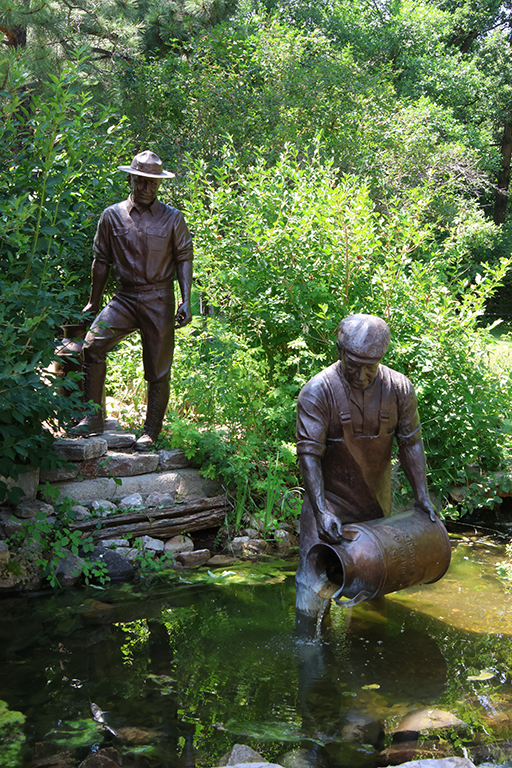
Some other methods of transportation include, backpacking, trucks, planes, and helicopters. The containers included backpacks tanks on trucks and even milk cans. The photo to the left captures stocking fish using a milk can. Whatever container the fish are in the water still had to be circulated, cooled, and oxygenated.


Also in the museum was the hatchery office. It included the original roll top desk, plus two pieces of equipment I even used when I was younger. Unfortunately, kids today have no experience with this type of equipment. (I felt a little old after seeing these.)
I learned that the fresh water from Spearfish Creek was brought into the hatchery via cedar water pipes. This occurred until the 1970s when most of the pipes were replaced. The hatchery made their own fish food by grinding up raw meat and mixing it with grains prior to the invention of fish pellets.
After the museum we headed up to the Booth House which is where the superintendents lived until 1983. The house was constructed in 1905 it was one of the first houses in Spearfish to have indoor plumbing and electricity.
Finishing up with the hatchery and enjoying the beautiful weather we stopped for ice cream then headed towards Deadwood and home. Where a surprise was waiting.


































 On the Road with Buki-6